Unit 3: FMR Data Processing Services: Data Mapping

In this unit, we'll cover FMR data processing services. We’ll also introduce the FMR API and how to use FMR's REST API to transcode a data set. We’ll conclude the unit by going over specific API parameters.
FMR data processing services
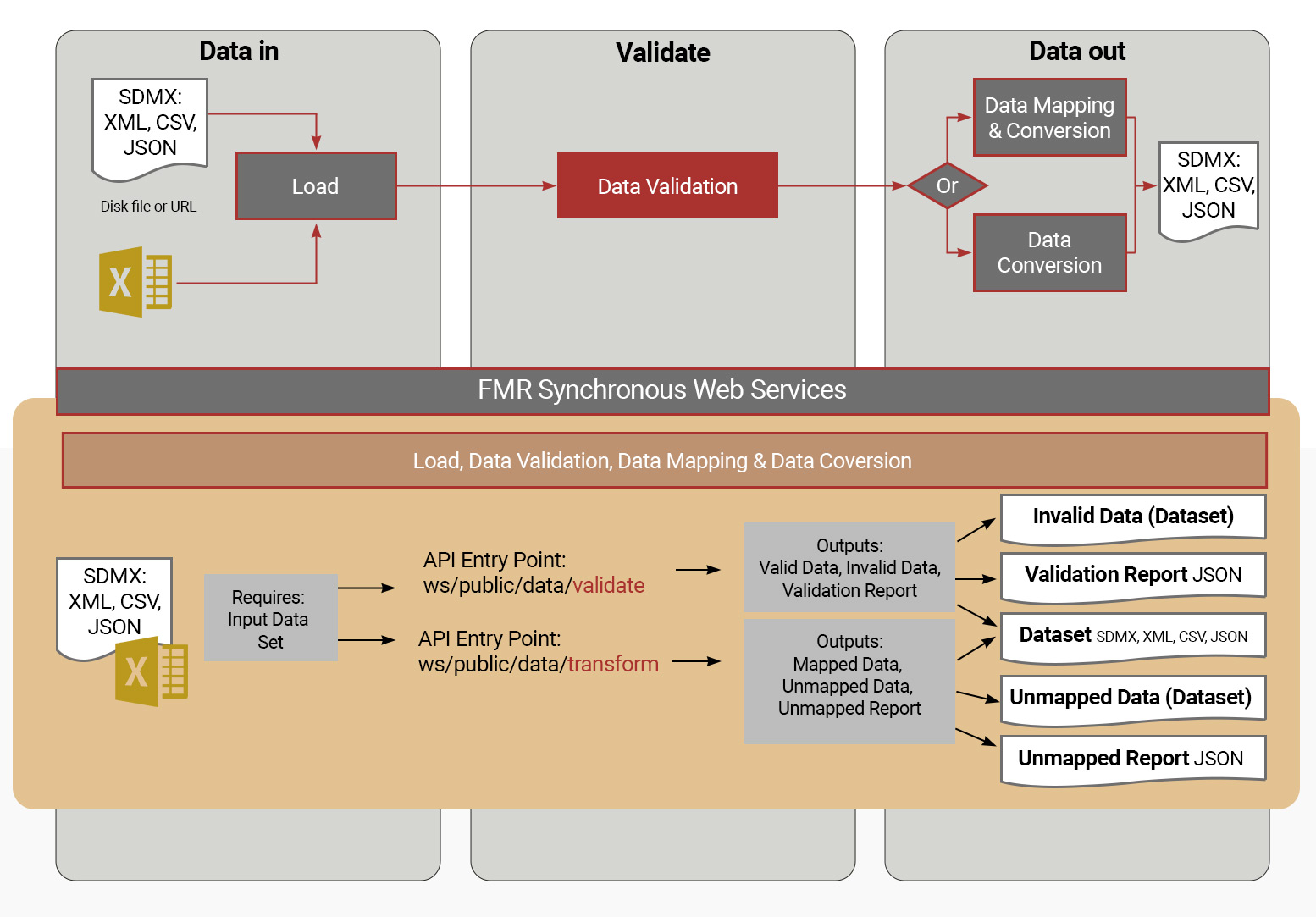
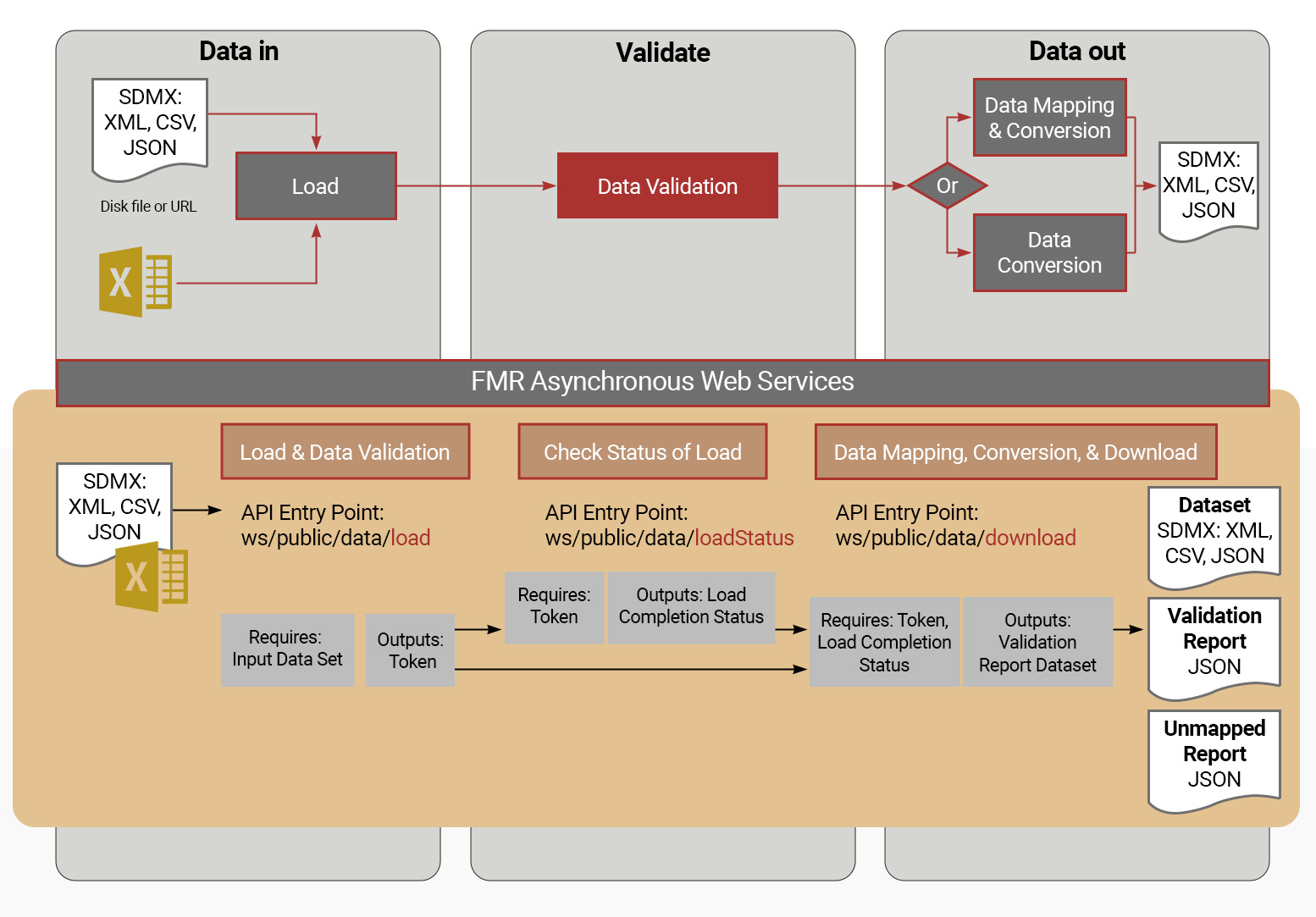
The FMR provides a User Interface (UI) for interactive use as well as an SDMX REST API for programmatic access. To support data processing, the FMR has introduced SDMX-compliant Data processing services for Data validation, Data conversion, and Data mapping, as illustrated below.
The SDMX API, however, does not provide data processing services. FMR has extended the SDMX API in order to provide these capabilities, as we'll see on the next screen.
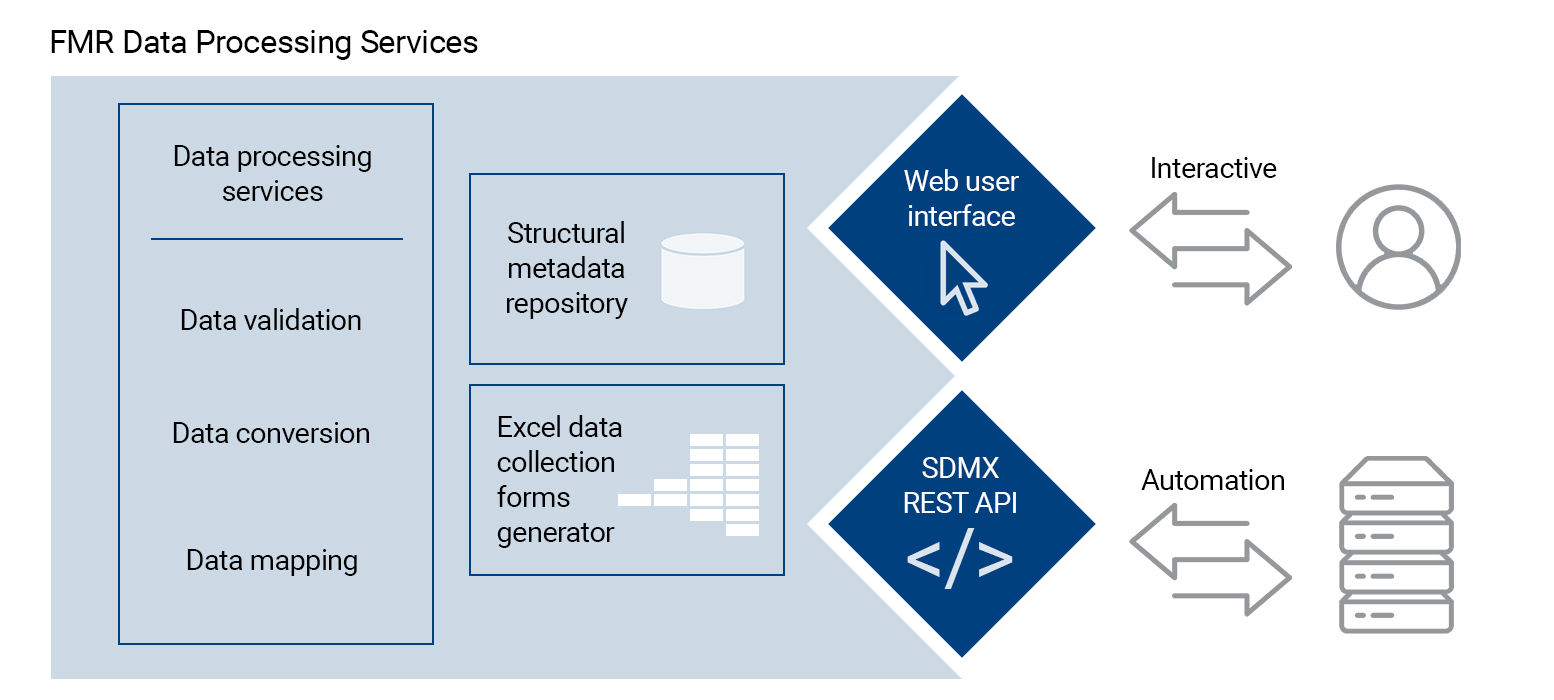
Select the flow chart to enlarge.
Fusion Metadata Registry API queries – data mapping
The FMR API provides additional functions that are necessary for a practical registry implementation, but not explicitly provided for in SDMX standard REST specification.
The table below provides more details regarding FMR API function and purpose.
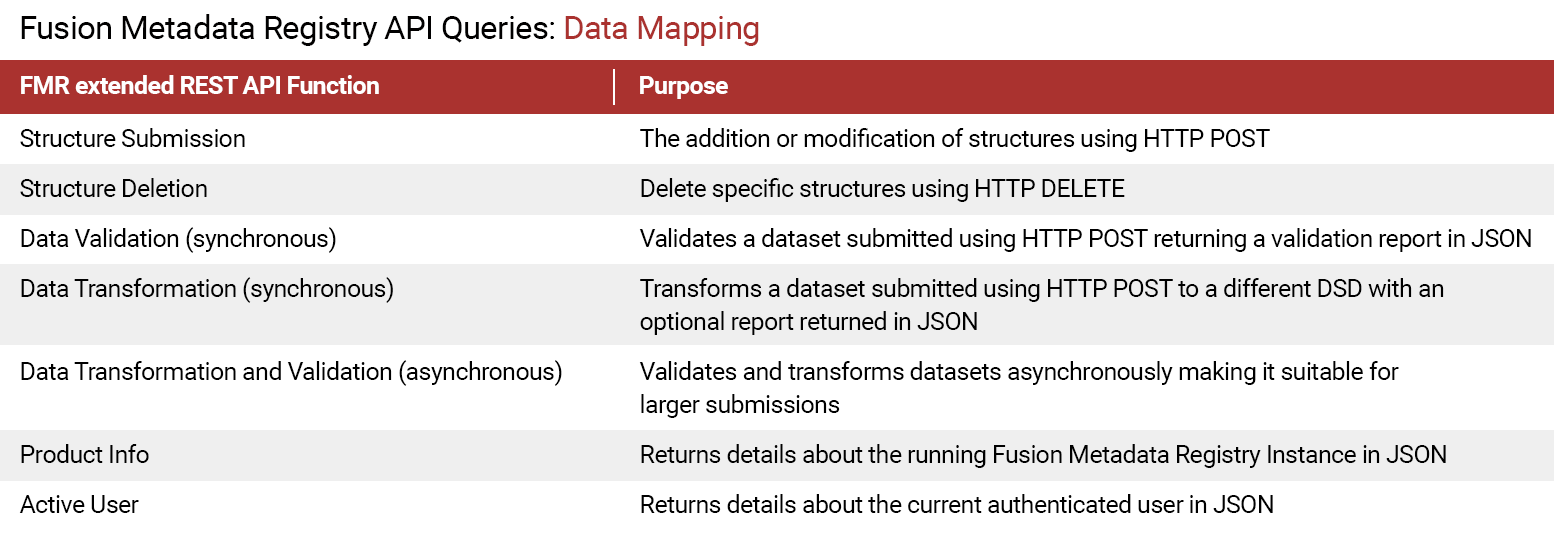
Select the table to enlarge.
Please see the References section at the end of this module for more information.
Using FMR's REST API to transcode a data set
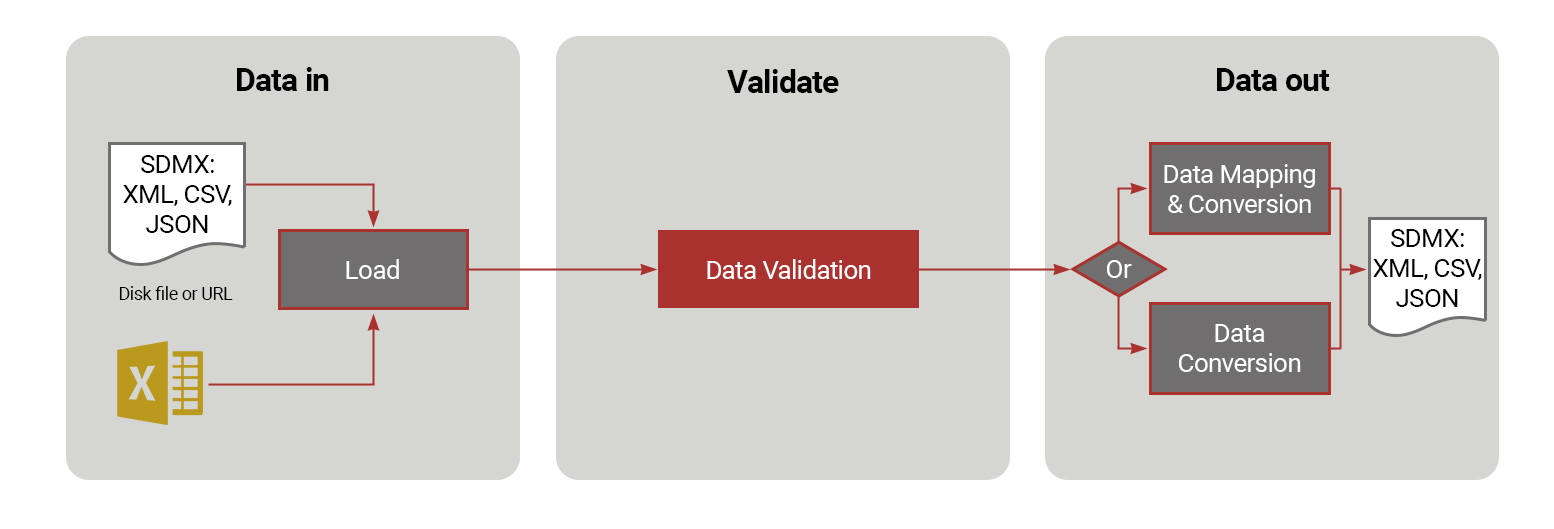
Mapping, or transforming, a dataset follows three steps: data in; transform; and data out, as shown in the image below. The specific details change depending on whether you are using the UI, the synchronous API, or the asynchronous API, but the fundamental principles remain the same. We'll examine this in more detail on the next screen.
Please note that the source data can be in any of the SDMX transmission formats (XML, JSON, CSV, EDI and FMR's own Excel layout).
More on Using FMR's REST API to transcode a data set
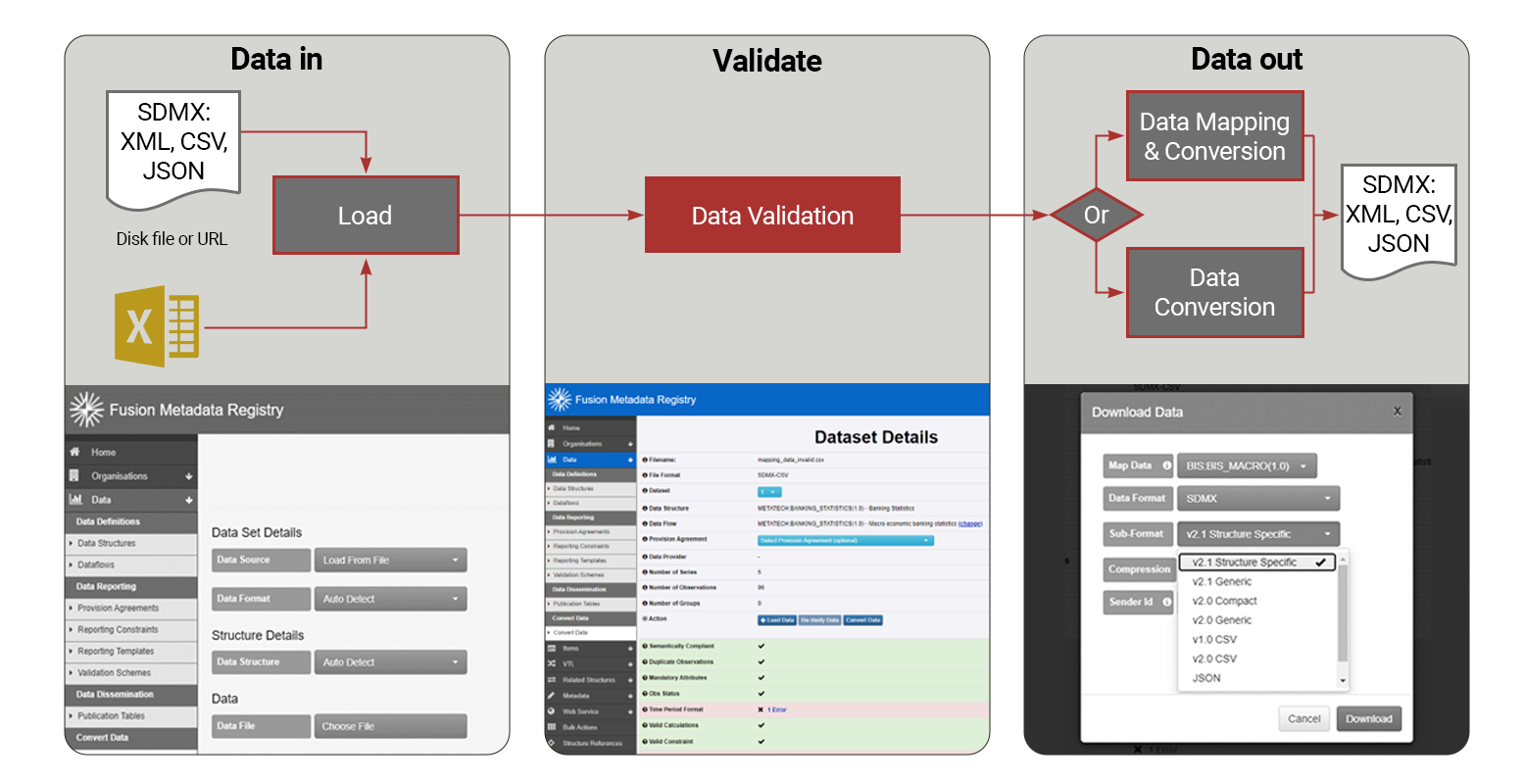
Select each tab below to view the steps that occur using the UI, the synchronous API, or the asynchronous API to map or transform a dataset.
- Data Source – Start by choosing where to load the data from
- Data Format – Defaults to SDMX but could be any valid format
- Data Structure – FMR will automatically detect the source datasets DSD for all SDMX formats and FMR excel
- Data File / URL – choose the dataset to load
FMR will load and validate the dataset and then, once validated, you have the option to transform
the dataset into a different SDMX format and save the transformed dataset.
FMR Data processing services – API parameters
Now let's turn our attention to specific API parameters relating to FMR data processing services. Review each of the tables that follow for more details on relevant API parameters for data validation, data conversion and data mapping.
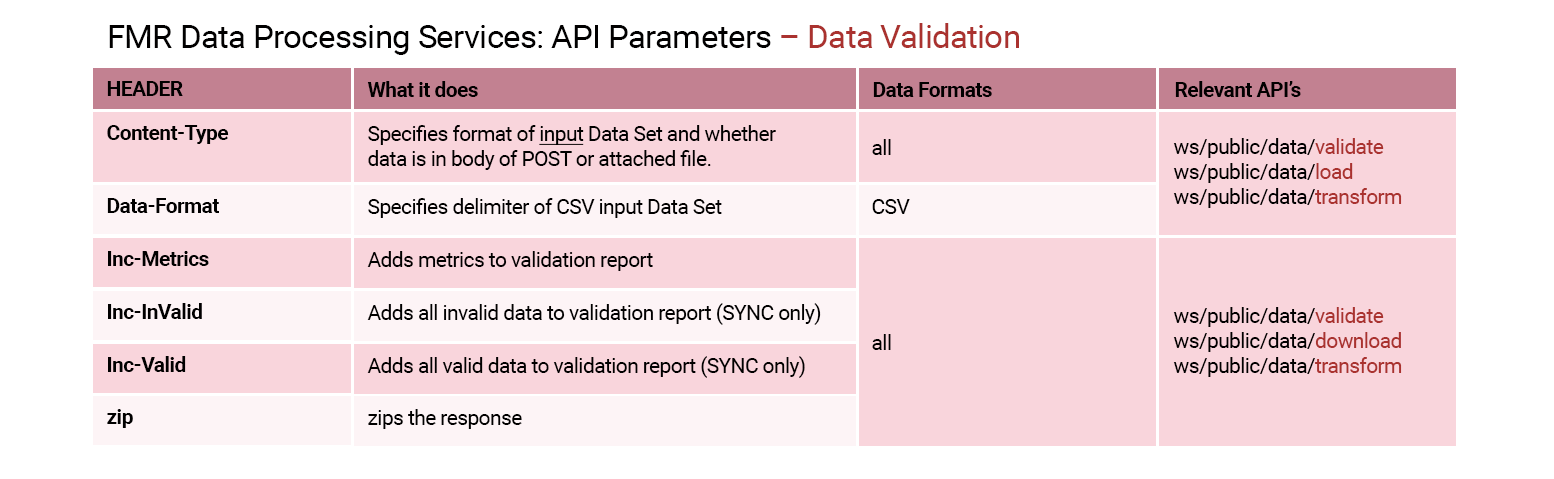
Select the data validation chart to enlarge.

Select the data conversion chart to enlarge.
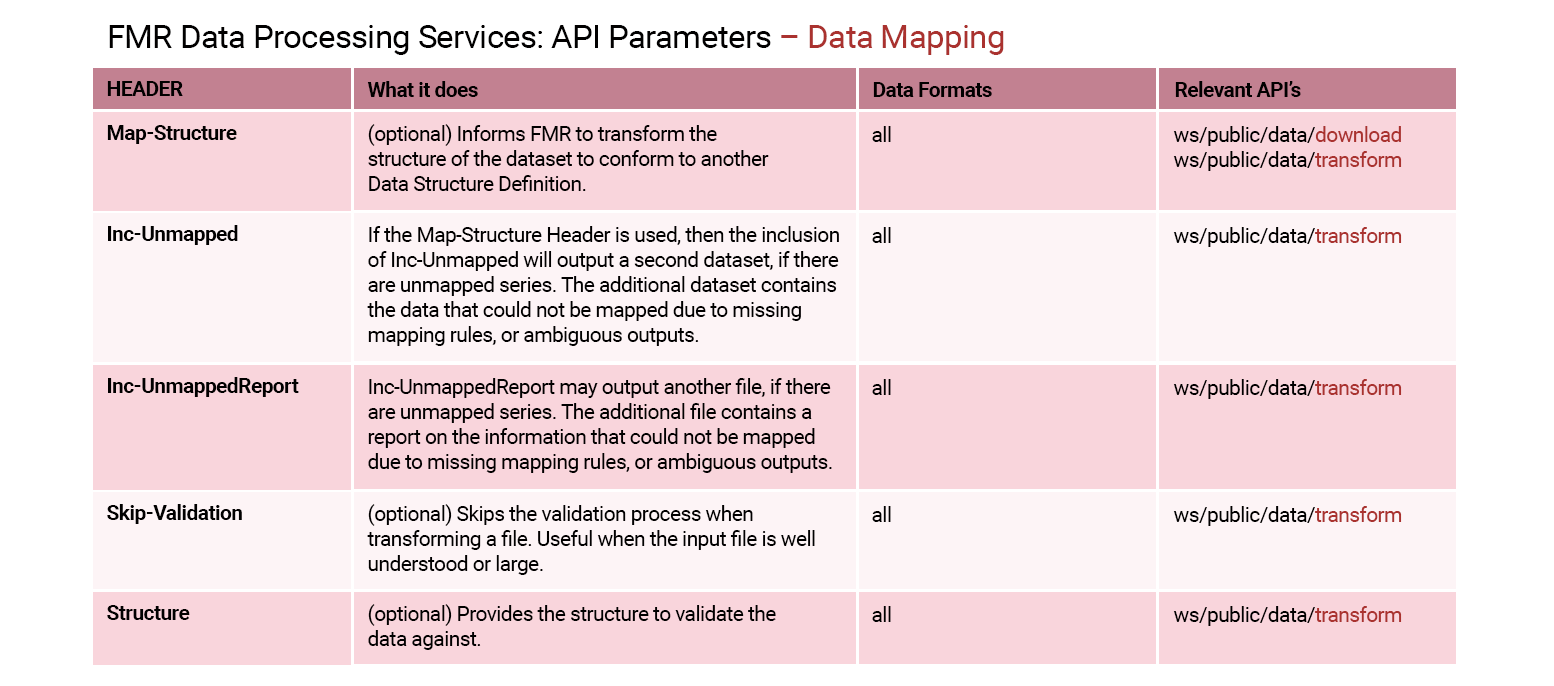
Select the data mapping chart to enlarge.
What do you know?
Which of the following headers specifies format of output data set?
Select your answer and then select Submit.
The header "Accept" specifies format of output data set.
The correct answer is option 3.
The header "Accept" specifies format of output data set.
Coming next
In the next unit, we'll focus on the first use case scenario involving one-to-one mapping.
Need help finding something? I am an AI Assistant that's here to help!
Welcome to SDMX AI assistant
What are you looking for?
By using this AI-powered service ("Service"), you acknowledge and agree to the following:
This Service uses generative AI to assist with statistical analysis and research. While the Service strives to deliver useful information, the output ("Output") may contain inaccuracies, omissions, or biases. The Output is provided for informational purposes only and should not be considered professional advice. You remain responsible for how you interpret and use the Output.
The BIS makes no warranties regarding the accuracy or completeness of the Output and accepts no liability for any loss or damage resulting from its use.
Do not include or share personal, private, confidential or proprietary information when using the Service.
By using this technology, you agree to the Terms and Conditions.
How the assistant can help you
Understand SDMX standards
Ask and get clear explanations about SDMX standards.
Navigate the website
Find tools and documentation on website quickly.
Explore SDMX tools
Ask about API, software and libraries supporting SDMX.
Access documentation
Locate technical guides, specifications, and FAQs.